
Dear Friends –
I’ll start with the fun news: First, there will be a total lunar eclipse visible over the US (including Hawaii, as well as most of the rest of the Pacific) this coming Monday night, March 2, with the action happening in the early morning of March 3. This means you’ll probably have to drag yourself out of bed to see it, but all you need is a clear view of the Moon (no equipment necessary, though it can be fun to watch with binoculars). If you want to limit your awake time, I recommend getting up to watch about 15 to 20 minutes before totality, then watching at least a few minutes of the total stage. Here’s a brief summary of the key times by time zone (see this article for more details):
- Hawaii time: The partial lunar eclipse (when you’ll first notice Earth’s shadow touching the Moon) begins when the Moon enters Earth’s full shadow (umbra) at 11:50pm. Totality (when Earth’s shadow completely engulfs the Moon) begins at 1:04 am and ends at 2:03 am.
- Alaska time: Partial begins at 12:50 am, total begins at 2:04 am and ends at 3:03 am.
- Pacific time: Partial begins at 1:50 am, total begins at 3:04 am and ends at 4:03 am.
- Mountain time: Partial begins at 2:50 am, total begins at 4:04 am and ends at 5:03 am.
- Central time: Partial begins at 3:50 am, total begins at 5:04 am and ends at 6:03 am.
- Eastern time: Partial begins at 4:50 am, total begins at 6:04 am and ends at 7:03 am.
- In terms of what to watch for, I especially like: (1) Notice Earth’s clearly curved shadow as it moves across the Moon during the partial stages, which is one of many forms of proof that Earth is round. (2) The Moon will become noticeably red in color during totality (which is why this is sometimes called a “blood moon”); the redness occurs because the only sunlight reaching the Moon during totality is coming through the ring-shaped “edge” of the Earth, which is where people on Earth are seeing the reddish color of either a sunset or sunrise.
Next in the fun news department, it’s time to make your plans (if any) for the next two total solar eclipses. This year’s occurs on August 12, though totalitiy will be visible only over parts of Greenland, Iceland, and Spain. Next year’s, on August 2, 2027, crosses over southernmost Spain, Gibraltar, and North Africa. For details, see my Eclipse Q&A on Medium and be sure to download the latest update of our free Totality app. AND:
- Interested in traveling to the 2027 eclipse? I’ll be a speaker for Dr. Doug Duncan’s Gibraltar eclipse trip; click for info and pricing.
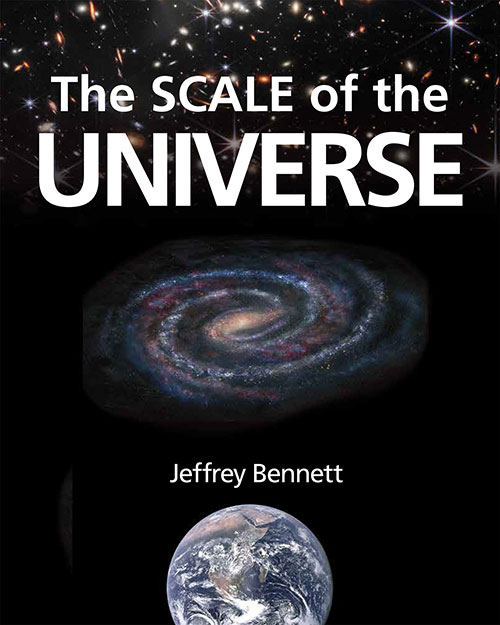
Lastly for the fun news, my new book The Scale of the Universe is now available. I hope you’ll check it out.
- For those in northern Colorado, I’ll be speaking on this topic for the Northern Colorado Astronomical Society on April 2, 6:15pm at the Ft. Collins Museum of Discovery.
- If others would like me to come speak on this topic, please email me…
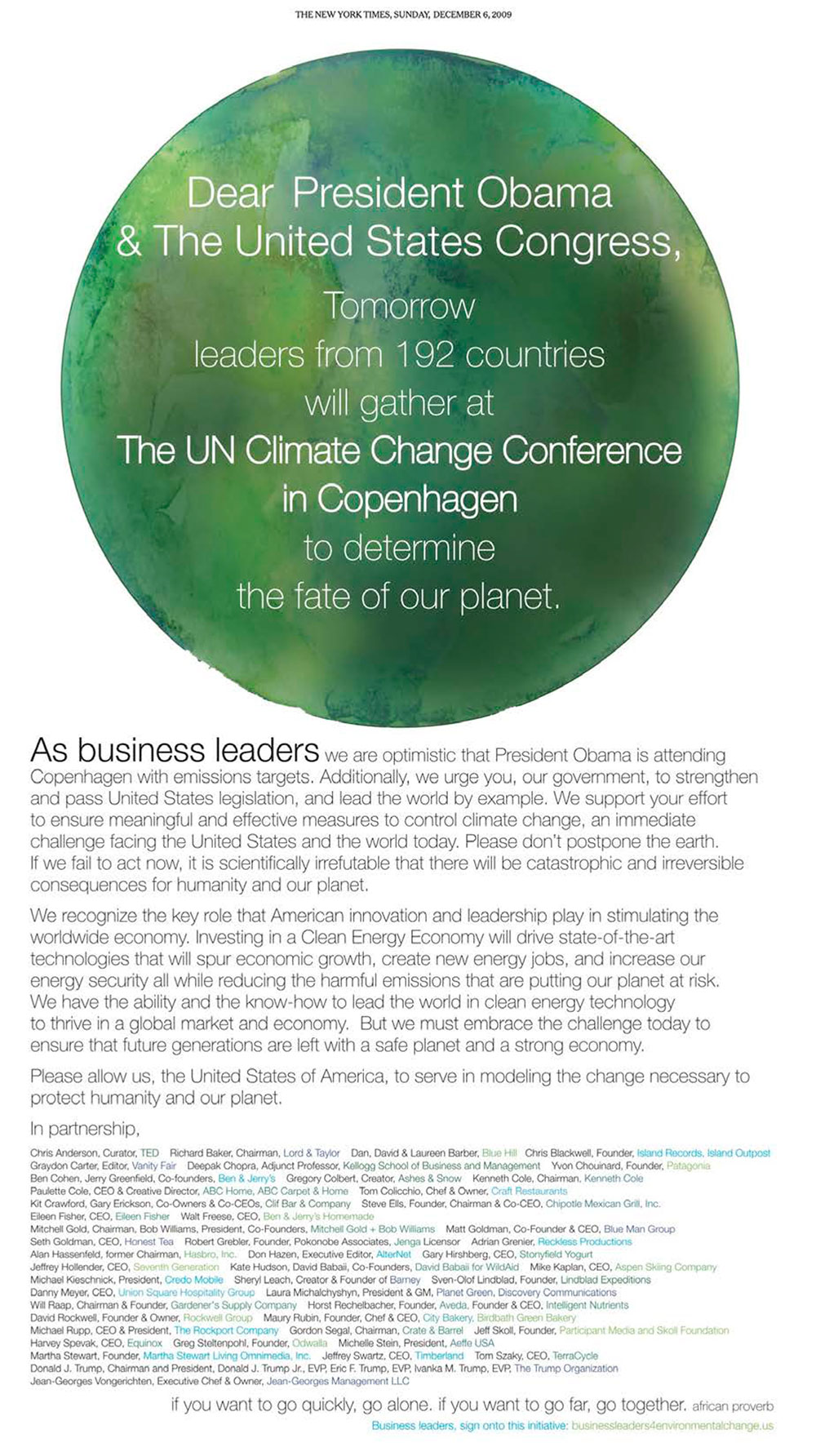
Now for the bad news and how you can help: Whatever your political beliefs, it should be possible for all of us to agree that facts matter and that scientific research has been a key driver of the economy and is integral to both national and global prosperity. President Trump used to believe this too; indeed, in 2009, he urged the Obama administration to take stronger action on global warming, writing:
If we fail to act now [on global warming], it is scientifically irrefutable that there will be catastrophic and irreversible consequences for humanity and our planet.
— Donald J. Trump (and 54 others*), Dec. 6, 2009
* In a paid, full-page advertisement in the New York Times
Unfortunately, his administration has taken an opposite stance by rescinding the EPA’s “Endangerment Finding” that global warming poses a real threat (see my prior post about this, and note that this action runs completely contrary to more than 150 years of scientific study of the issue) and attempting to dismantle the National Center for Atmospheric Research (NCAR), located here in Boulder, CO. To understand the devastating impacts of this plan, below I’ve pasted (with his permission) an article from Robin Webb, former Director of Physical Sciences at the National Oceanic and Atmospheric Administration (NOAA). I urge everyone to speak up in defense of NCAR and science in general. Here’s how you can help:
- Write to your members of Congress. This form from the American Geophysical Union (AGU) gives you an easy way to voice support for NCAR.
- Through March 13, the National Science Foundation is accepting public comments about the plan to dismantle NCAR. You can send an email to them at NSF_NCAR@nsf.gov.
More generally, regardless of your political party, please remind any and all elected officials that science is critical to our economy and our future, and that they will earn your votes only if they stand up strongly for science.
Thanks for listening, and best wishes,
Jeff
Op-ed by Robin Webb, published in the Denver Post 12/19/25
Attack on Colorado’s World-Class Science Labs Puts Us All at Risk
In a major escalation of this administration’s attack on science and weather research, the Office of Management and Budget is saying it plans to break up the National Center for Atmospheric Research (NCAR) in Boulder. It accuses this renowned institution of “climate alarmism,” and “green new scam activities.”
As any climate scientist will tell you, we simply do not have time for this foolishness. If we do not defend these treasured scientific institutions right away, Trump will do to science what he did to the White House’s East Wing, and we will feel the fallout in all of our communities.
For over half a century, Colorado has been a hub of innovation and research for the federal government through the work of NCAR and the four National Oceanic and Atmospheric Administration (NOAA) research labs in Boulder. These institutions generate cutting edge scientific advances, along with weather and greenhouse gas data that the country relies on to stay safe from weather and climate disasters. The President’s plans for NCAR and proposed budget for the NOAA labs would shut these labs down or dramatically reduce their funding, compromising our country’s ability to provide early warning and to inform preparedness for wildfires, droughts, floods and other extreme weather and climate impacts.
I served as the director of one of the NOAA labs until my retirement earlier this year, and worked to advance the prediction of extreme weather events, among other things. That included minimizing impacts to major infrastructure systems that are too important to fail, such as nuclear facilities, high-hazard dams and flood control levees.
Research from the NOAA labs helps improve the predictability of wildfire behavior, from minutes to hours, and wildfire risks, from days to weeks, to allow officials to strategically position resources in advance. It also helps predict the availability of water and conditions leading to drought, which informs how we manage water resources in arid regions in the West.
Watching the shrinking of NOAA staff this year–through dismissals and early retirements–has been indescribable. I am disheartened and frustrated to witness this attempt to push the nation’s top notch scientific talent out of the government. With this attack on the agency, its operations, and on scientific integrity, the Boulder laboratories stand to lose critical expertise the country needs to produce cutting-edge science that will support future decision making.
The research activities NCAR and the NOAA labs in Boulder conduct are predominant sources of authoritative weather and climate data, forecasts of extreme weather and predictions of changes in climate. The administration would rather pretend: if we don’t see it, study it, or predict it, then it doesn’t exist.
The future impacts of tornadoes, hurricanes, wildfires, droughts and other weather disasters on our nation will sadly show them otherwise. Lives, property, livelihoods and the health of our economy are riding on the science the NOAA labs and NCAR produce.
Here in Boulder, we’re fortunate to have a champion for NCAR and NOAA and for science, Representative Joe Neguse (D-CO). He has introduced legislation that would boost NOAA funding, protect life-saving programs and restore access to vital services.
Congress should follow his lead and use its oversight power to protect the core missions and critical capabilities of these excellent institutions that Americans count on every day to protect their health, safety, and economies.
Dr. Robert S. Webb retired in January after over 30 years at NOAA, most recently as director of NOAA’s Physical Sciences Laboratory.